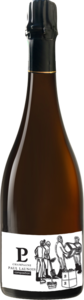
![Henri Giraud - Argonne 2018 [Individual wooden box]](/uploads/thumbnails/dbf5face7665f318d3ac479777dd334e9fb44426_800x800.png "Henri Giraud - Argonne 2018 [Individual wooden box]")
Henri Giraud - Argonne 2018 [Individual wooden box]
| Distrikt | Montagne de Reims, Vallée de la Marne |
| Druvor | Chardonnay, Pinot Noir |
| Årgång | 2015, 2018 |
| Fyllighet | 9 |
| Fruktsyra | 9 |
| Sötma | 1 |
| Procucenter | Champagne från Henri Giraud |
| Artikelnr | Henri Giraud 113 |
| Lagerstatus | |
| Förpackningsmaterial | OWC trälåda |
| Fraktkostnad | 169:- |
Här redovisar och presenterar vi kända vinskribenters utlåtande om specifika viner. Utöver dessa lägger vi in en egen kommentar när vi har provat samma vin.
Druvor
90% Pinot Noir och 10% Chardonnay
Tasting note
'The first word that comes to mind in tasting Giraud’s Argonne – which, as its name suggests, was initially raised in new Argonne oak barrels – is “sumptuous.” I cannot recall having previously tasted such an envelopingly and almost thickly rich Champagne. The selection of Ay Pinot Noir chosen here is more than capable of subsuming any overt influence that new oak might otherwise have bestowed on it. Lightly baked apple, quince, and marzipan inform the nose and silken, expansive, plush palate, accompanied by subtly resinous and smoky black tea. The combination of breadth, textural allure, and fine yet intensely active mousse is spine-tinglingly impressive, striking its balance between vinosity and effervescence at a remarkable high energy level. Hints of salt and iodine add interest, local color, and saliva-inducement to a powerful finishing wave of fruit and nut essences. I suspect one will be rewarded for following this 8-10 years down the pike; though I confess to lack of directly relevant experience. '
-
Henri Giraud är har under senare år flammat upp som en av de stilistiska förebilderna av fatlagrad Champagne. Med sällan skådad säkerhet balanserar Henri Giraud moderna vinmakningstekniker med traditionella metoder. Användningen av ekfat från den närliggande skogen, Argonne är central. Faten binds av Tonnellerie Chassin i Bourgogne, samma tunnbindare som producerar faten åt Domaine de la Romenée-Conti.
ARG̈ONNE, skönheten och odjuret
-
Well known for their barrel-fermented, muscular and vinous wines, Henri Giraud owns 10 hectares of vineyards, which account for approximately one-third of their total grape requirements. Around 40% of the fruit is sourced from Aÿ and its neighboring areas. While some of the parcels from which they purchase grapes are farmed by their team, even those not under their cultivation are managed according to Henri Giraud’s guidelines. In all cases, their own team picks at harvest time.
Chef de cave Sébastien Le Golvet—originally trained as a stonemason—explains that the estate practices thoughtful viticulture, eschewing herbicides and synthetic fertilizers in favor of rolled cover crops, with two to three full cultivations per year.
They craft their own barrels in collaboration with tonnelleries Gauthier, Chassin and Mercurey. The oak is sourced exclusively from the Argonne forest and selected through Tonnellerie de Champagne’s merranderie, where Henri Giraud maintains a dedicated space. There, the staves are split and pared before being seasoned. The wines undergo complete malolactic fermentation, and tirage occurs just before the next harvest—following a blending and clarification phase in June or July—allowing the vins clairs to spend about 10 months on the lees in oak, contributing to their textural, patinated style. Approximately 10% of the barrels are renewed each year. Dosage is typically between five to six grams per liter.
Their most emblematic non-vintage cuvée—the MV—is aged in 50% new barrels, with the remainder matured in once-used oak. Discerning tasters may have noted that this cuvée no longer carries the Fût de Chêne designation; it is now simply labeled MV, followed by the final two digits denoting the base vintage, which typically comprises approximately two-thirds of the blend.
In contrast, the vintage-dated Argonne cuvée is matured entirely in new oak. The Argonne is crafted exclusively from estate-grown fruit sourced from four to five parcels in Aÿ, using only the most acid-driven press fraction—the heart of the cuvée.
The Argonne Rosé, essentially a counterpart to the white version, is also aged exclusively in new oak, but it is distinguished by the addition of 6% still red wine, likewise sourced from Aÿ.
For their non-vintage wines, Le Golvet employs an individual perpetual reserve system. They typically store this reserve without the lees in square concrete tanks lined with stainless steel and refresh it by 30% each year.
While in their youth these Champagnes exhibit considerable power and distinctive patina derived from barrel maturation, the perception of new oak—whether embraced or resisted—largely depends on the taster’s personal preferences and threshold of perception. Nevertheless, one can be equally assured of their capacity to evolve with complexity over time.
-
Robert Parker Wine Advocate
2018
★★★★
Efter de traumatiska åren 2016 och 2017 fick champagneodlarna le igen 2018. Säsongen var dock inte heller problemfri med hagel i maj och en rekordvarm sommar (den näst varmaste någonsin efter 2003). Skörden gav rikedom både i mängd och i koncentrerad juice.
Sockermängden och den potentiella alkoholhalten slog i taket. Förvånande nog var syran betydligt högre än väntat, vilket kommer att ge välstrukturerade och mäktiga viner av hög klass. Som vanligt ska man dock ta odlarnas euforiska hyllningar till årgången med en nypa salt. Stilmässigt skulle jag tippa att vi har att göra med någonting mitt emellan 1964 och 1982, och det vore ju inte det sämsta. Maillarts Les Loges är redan fantastisk.
-
2018 by Curtis Joseph
★★★★
- Harvest: August 20th
- Total Sales: 301,856,265 btl
- Yield: 12,361 kg/ha (10,800 kg/ha AC)
- France: 147,023,258 btl
- Area under vine: 33,843 ha
- Export: 154,833,007 btl
- Average potential alcohol: 10.2%
- Prix Constaté: €6.20/kg
- Average total acidity: 5.9 g/l
- Average gluconic acid: 0.03 g/l
Overview: A new record for heat and sun 2018 was a year of generous yields, lots of alcohol, and unfortunately little acidity.
The vintage is popularly considered a success, and doubtless, some excellent vintage wines will be produced. At this early juncture, however, it is impossible to´judge well, since exposure to the vins clairs has been brief, and there are no finished wines yet. However, it may well prove the case for the connoisseur that wines from 2018 may lack tension and structure. The winter of 2017 – 2018 was uncommonly warm and wet, becoming both cooler and drier in February and March. Budbreak was in April, followed by rapidly advancing vegetation due to warm weather and a full complement of water in the soil from the prior winter. Although there were some´localized storms in the late spring, little damage was done. Flowering was early and thorough. By mid-July, the weather was scorching hot and dry. 2018 is the hottest summer on record since measurements began, breaking the record set by 2003.
Fortunately, it lacked the severe heatwave of 2003, and the vines never shut down due to water stress. Harvest began in beautiful if hot, conditions. Eric Rodez delivered a surprisingly elegant Chardonnay vin clair from Les Jeunettes: “Ripe – loads of tropical fruit here, but there is still enough acidity to balance it. and his Pinot Noir from Les Beurrys was also ravishing: “Lovely expression of red fruits; exquisite, full-bodied but not heavy at all.”
On the north face of the Montagne, the Bérèche brothers have conserved the liveliness of the fruit from Le Cran: “Lovely freshness and concentration, with floral notes and a well-developed fruit character but enough structure to balance the richness.” Equally enticing was Pinot Noir from Mailly: “This has an accessible, forward red berry fruit on the attack, but there is plenty of freshness and structure on the palate to deliver a lively wine.”
Given these encouraging results, I hope that there will be other surprising successes when the 2018 vintage begins to reach the market.
Relaterade produkter